Goethe's Wisdom for Learning German Confidently
Sep 18, 2026
You Know the German Rule — But Can You Use It?
You've studied the grammar.
You've learned the vocabulary.
You understand the rule.
And then someone speaks to you in German.
Suddenly, knowing what is correct and using it in the moment can feel like two very different things.
Perhaps you hesitate.
Perhaps you make a mistake.
Or perhaps you know exactly what you want to say—but need time to put the sentence together.
I've experienced this from both sides: as a foreign-language learner myself and as a German teacher.
And one lesson has stayed with me:
Learning doesn't stop when you understand something.
You have to use what you've learned.
Johann Wolfgang von Goethe expressed this beautifully:
✨“Es ist nicht genug, zu wissen, man muss auch anwenden. Es ist nicht genug, zu wollen, man muss auch tun.”
✨“It is not enough to know; one must also apply. It is not enough to want; one must also act.”✨
In This Article, You'll Discover:
- ✔️ why understanding German isn't the same as being able to use it
- ✔️ what learning French taught me about putting grammar into practice
- ✔️ why mistakes can be part of learning to communicate
- ✔️ how my own experience as a language learner shaped the way I teach German
- ✔️ a simple method for turning new grammar and vocabulary into practical German
- ✔️ how DER, DIE, DAS fit into your larger journey towards confident communication
Because the goal isn't simply to know more German. It's to be able to use the German you know. 🌿
Wissen vs. Anwenden: Knowing German Isn't the Same as Using It
Wissen — Knowing
Perhaps you know:
🔵 der Beruf = the profession
🔴 die Arbeit = the work
🟢 das Büro = the office
You know that nouns ending in -ung are usually feminine:
die Wohnung = the apartment
die Rechnung = the invoice
die Besprechung = the meeting, the discussion
You may even recognise these patterns immediately in an exercise.
That's valuable knowledge.
But then comes the next stage.
Anwenden — Applying
Can you use the words in sentences?
Die Arbeit endet um siebzehn (17) Uhr. = The work ends at 5 PM.
Die Besprechung beginnt um neun (9) Uhr. = The meeting begins at 9 AM.
Das Büro ist im zweiten (2.) Stock. = The office is in the second floor.
Can you use the grammar while writing an email?
Can you retrieve it during a conversation?
Can you continue speaking even when you're not completely certain?
That's the transition from knowing German to using German.
And I learned how important that transition is through my own experience with French.
What Learning French Taught Me
I lived for seven years in Lausanne, in the French-speaking part of Switzerland, and during that time I learned French.
- I studied grammar rules.
- I learned pronunciation.
- I built my vocabulary.
All of that was important—and sometimes challenging.
But eventually I discovered something equally important:
Knowing the rules wasn't enough. I had to use them.
French was part of everyday life around me, so I had to take what I had learned and put it into practice.
- I had to speak.
- I had to form sentences.
- I had to apply grammar while communicating rather than simply recognising it in an exercise.
And, of course, I made mistakes.
Sometimes I confused rules. Sometimes I had to think about how to express something.
That's part of learning a foreign language.
The important thing was to use what I was learning, notice where I still needed practice, correct myself and continue.
That experience has stayed with me throughout my work as a German teacher.
I've Experienced Language Learning from Both Sides
Today, I bring two perspectives into my lessons.
I've been the foreign-language learner trying to understand and use an unfamiliar language.
And I've been the native-language teacher helping learners understand and use German.
Over more than 11 years of teaching German learners from around the world, I've repeatedly seen the same principle:
Understanding is important. Application is what brings that knowledge into real life.
That's why I don't want my students simply to recognise a grammar rule.
I want them to do something with it.
- We build a sentence.
- We ask a question.
- We use the new vocabulary.
- We practise a short conversation.
- We return to the concept later and use it again.
That's why one of the principles behind my teaching is:
Understand → Practise → Apply → Review
You don't need to wait until your German is perfect before you start using it.
Mistakes Can Be Part of the Learning Process
When I learned French, I didn't use everything perfectly from the beginning.
And German learners won't either.
Accuracy matters. We want to learn correct grammar, vocabulary and pronunciation.
But if you wait until you're certain you'll make no mistakes, you may miss opportunities to practise what you're learning.
Imagine you've learned:
🔴 die Wohnung
But while speaking, you say:
❌ Das Wohnung ist in Frankfurt.
You check the sentence and realise that Wohnung is feminine.
So you correct it:
✅ Die Wohnung ist in Frankfurt.
Then use it again:
✅ Die Wohnung ist in Frankfurt. Die Wohnung ist praktisch.
Now you've done more than read a rule. The mistake itself has become part of the learning process.
You've applied it, noticed a problem, corrected it and used it again.
That's valuable practice.
Turn What You Learn into Action
1. Learn One Small Concept
Don't try to understand all of German grammar tonight.
Choose one thing.
For example:
Nouns ending in -ung are feminine.
🔴 die Wohnung
🔴 die Rechnung
🔴 die Besprechung
2. Apply It Immediately
Don't stop after reading the rule.
Say:
Die Wohnung ist schön. = The apartment is pretty.
Write:
Die Rechnung kommt morgen. = The invoice comes tomorrow.
Ask:
Wann beginnt die Besprechung? = When does the meeting start?
3. Use It Again Later
Return to the words tomorrow.
Use them in a different sentence.
Notice them when reading German.
Listen for them in conversation.
4. Correct and Continue
If you make a mistake, check it.
Correct it.
Then use the correct form again.
Know → Apply → Correct → Repeat
That is Goethe's principle turned into a practical language-learning habit.
From Grammar Exercise to Real Life
If you're learning German because you live or work in Germany or Switzerland, try connecting what you study to situations you actually encounter.
Learned vocabulary about meetings?
Use it to prepare one sentence you might need at work.
Learned vocabulary about appointments?
Practise asking for a time.
Learned a new noun?
Use it in a sentence about your own life.
Instead of asking only:
“Do I understand this rule?”
also ask:
“What can I do with it?”
That small question can change the way you practise.
DER, DIE, DAS: From Knowing to Doing
DER, DIE and DAS are a perfect example.
You might already know that every German noun has a grammatical gender.
You may even know many of the common patterns.
But when you're speaking, do you still hesitate?
Der...? Die...? Das...?
Let's apply Goethe's principle.
Know the rule:
Nouns ending in -ung are feminine.
Learn the vocabulary:
🔴 die Besprechung
Apply it:
Die Besprechung beginnt um neun Uhr.
Use it in your own context:
Die Besprechung ist in Zürich.
Now you're moving from:
Rule → Vocabulary → Sentence → Communication
And that is exactly where DER, DIE and DAS fit into the bigger picture.
Your German Confidence Path 🌿
DER, DIE, DAS Are Important—But They're Not the Final Destination
They're part of a larger journey.
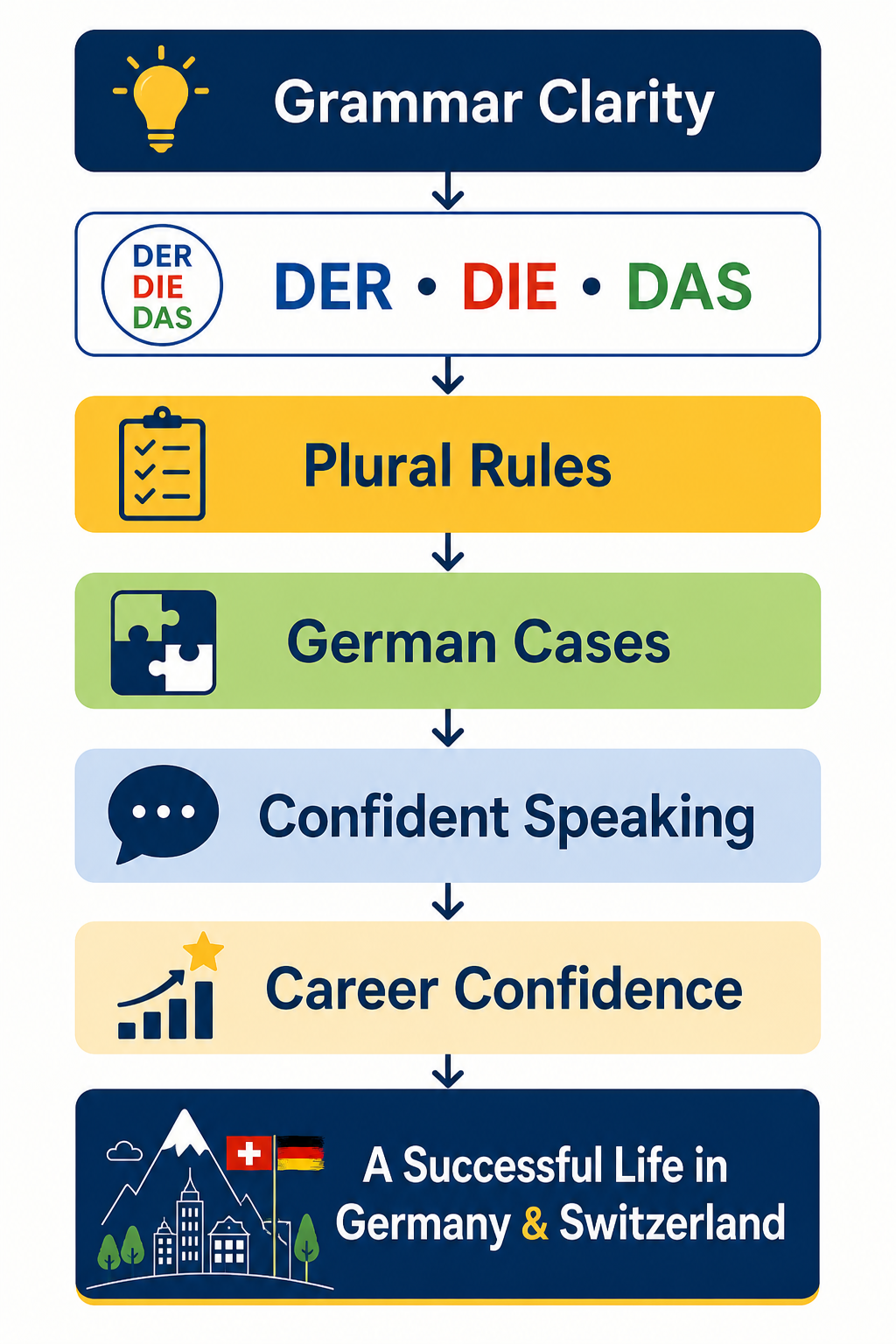
Each stage gives you something new to understand, practise and apply.
You don't have to complete the whole path today.
You simply need to take what you're learning now and begin using it.
That is what Goethe's words represent so well:
Knowledge matters. Application brings that knowledge into your life.
Ready to Put What You've Learned into Practice?
If DER, DIE and DAS are something you understand in theory but still hesitate over when you're speaking, this is a good place to start.
🎁 Get Your FREE 5-Day DER, DIE, DAS Roadmap
Instead of simply reading more grammar rules, you'll have a clear structure for putting the basics into practice step by step.
✔️ Learn useful article patterns
✔️ Complete short exercises
✔️ Practise consistently
✔️ Apply what you've learned
✔️ Build a stronger German foundation
👉 Get the Free 5-Day DER, DIE, DAS Roadmap
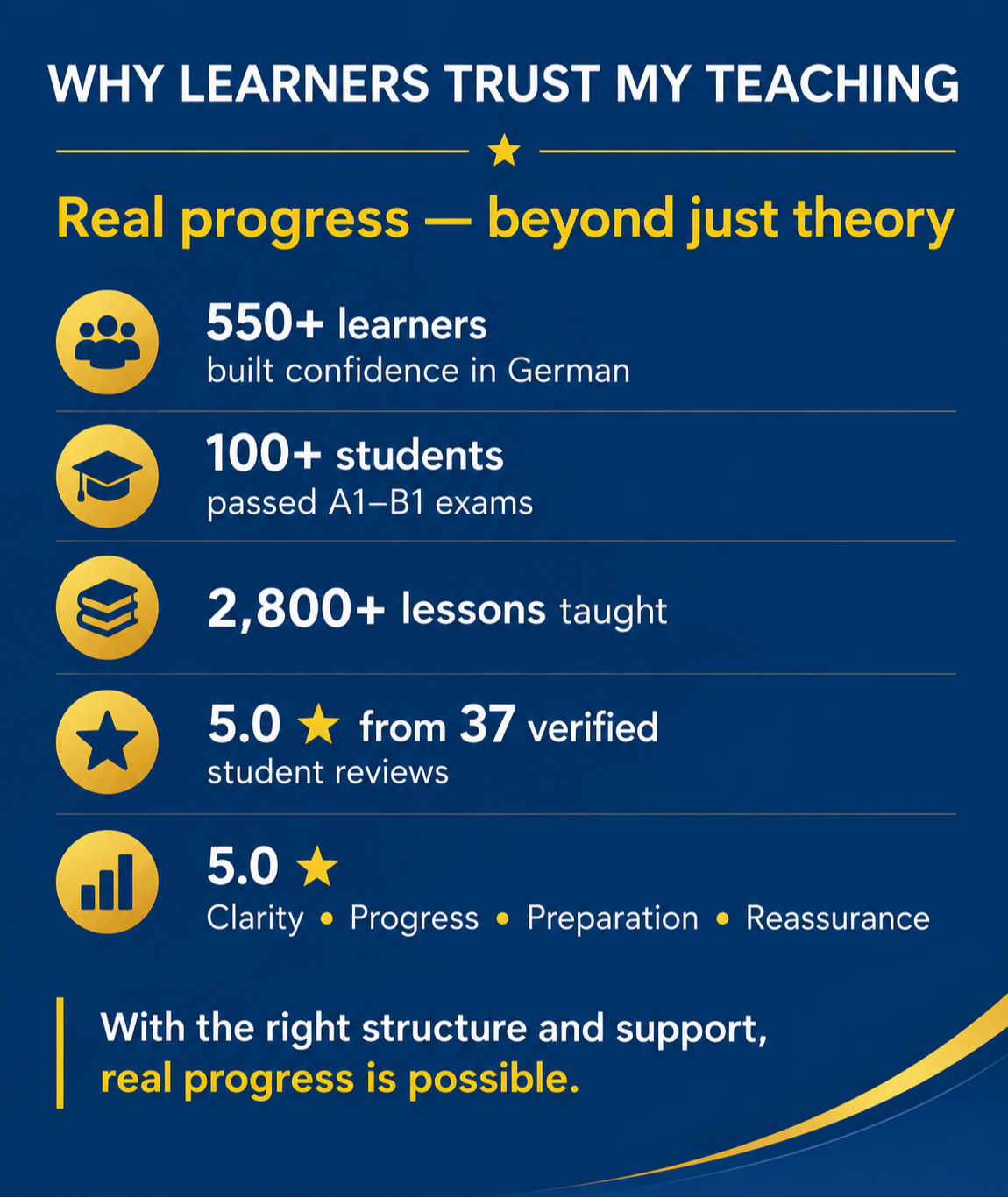
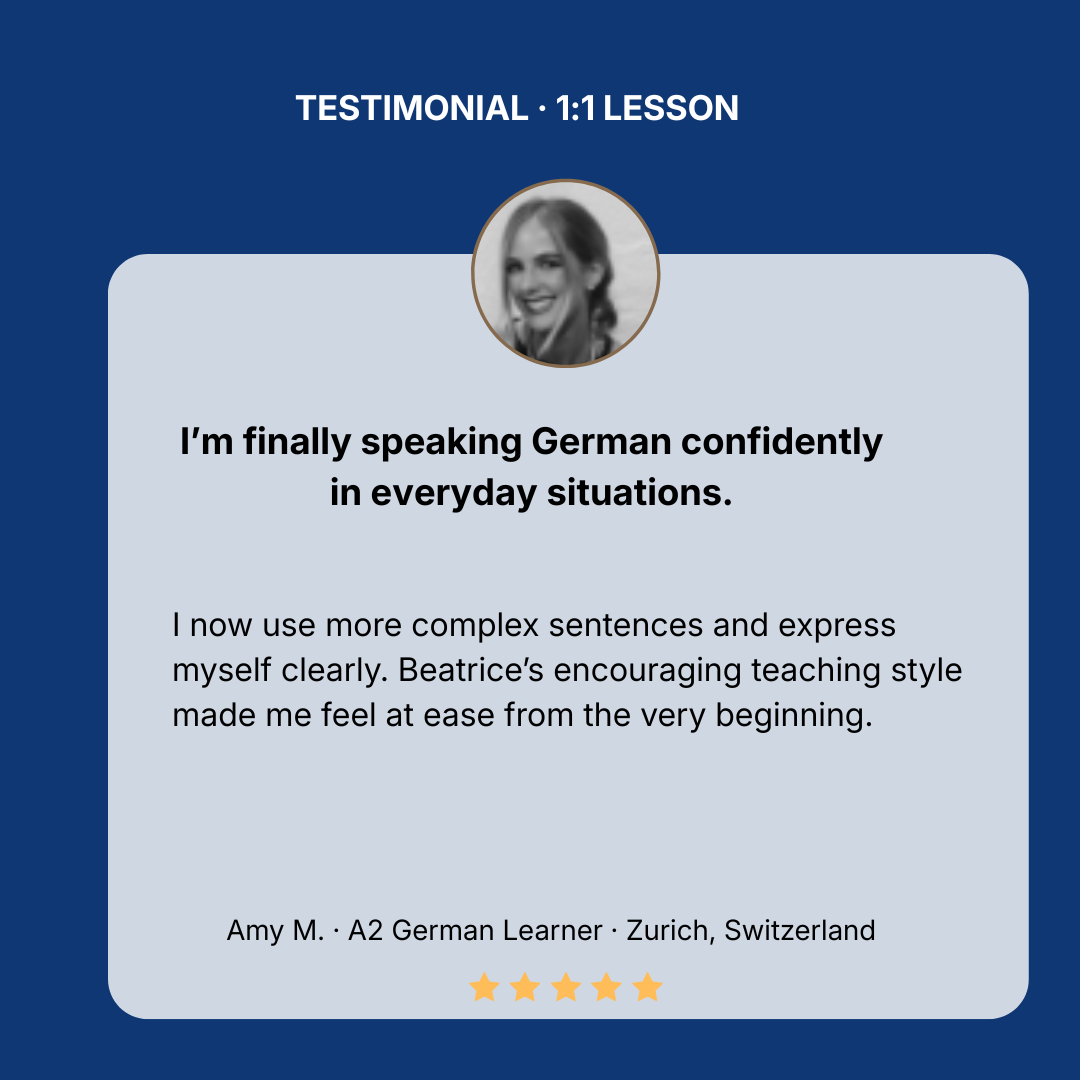
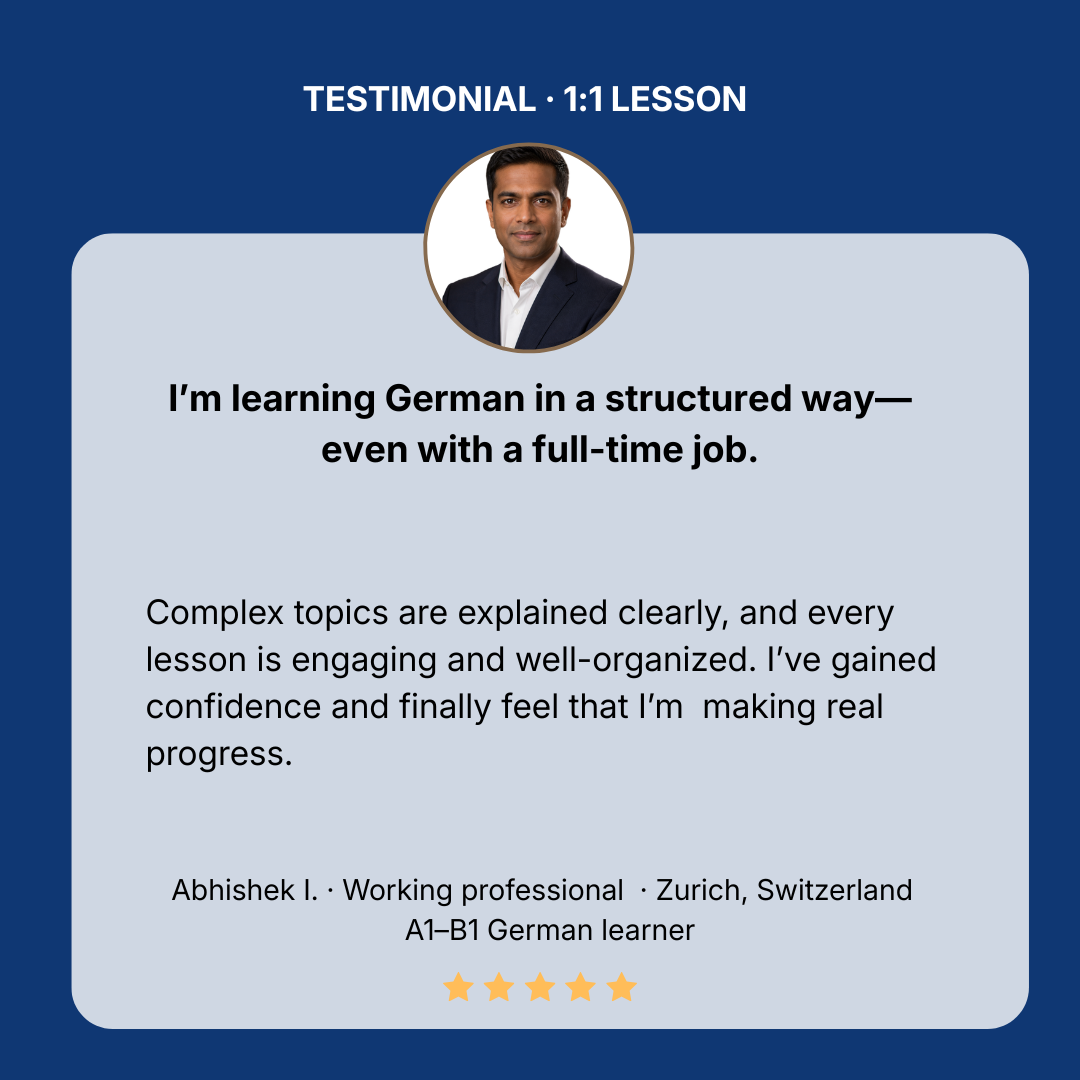
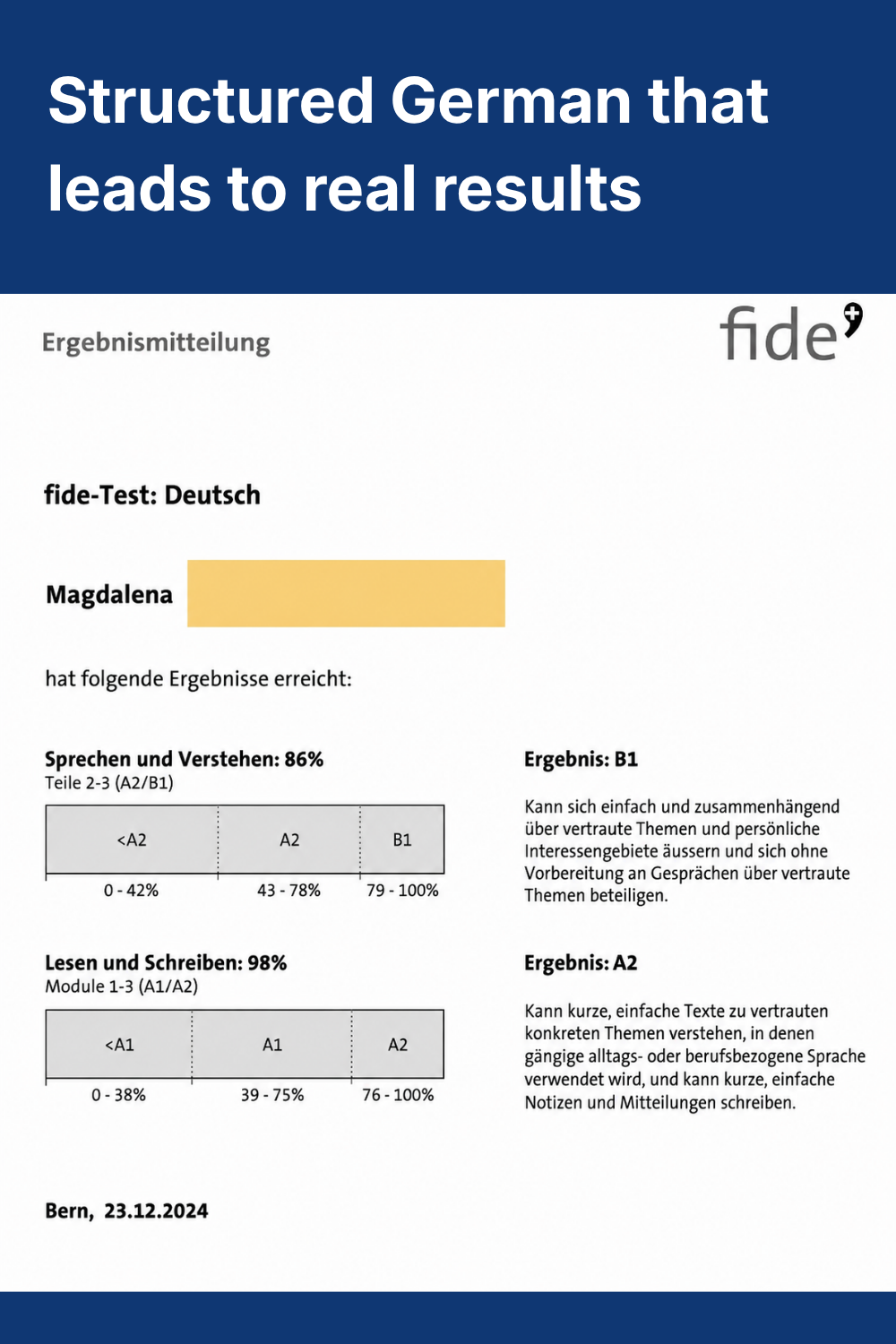
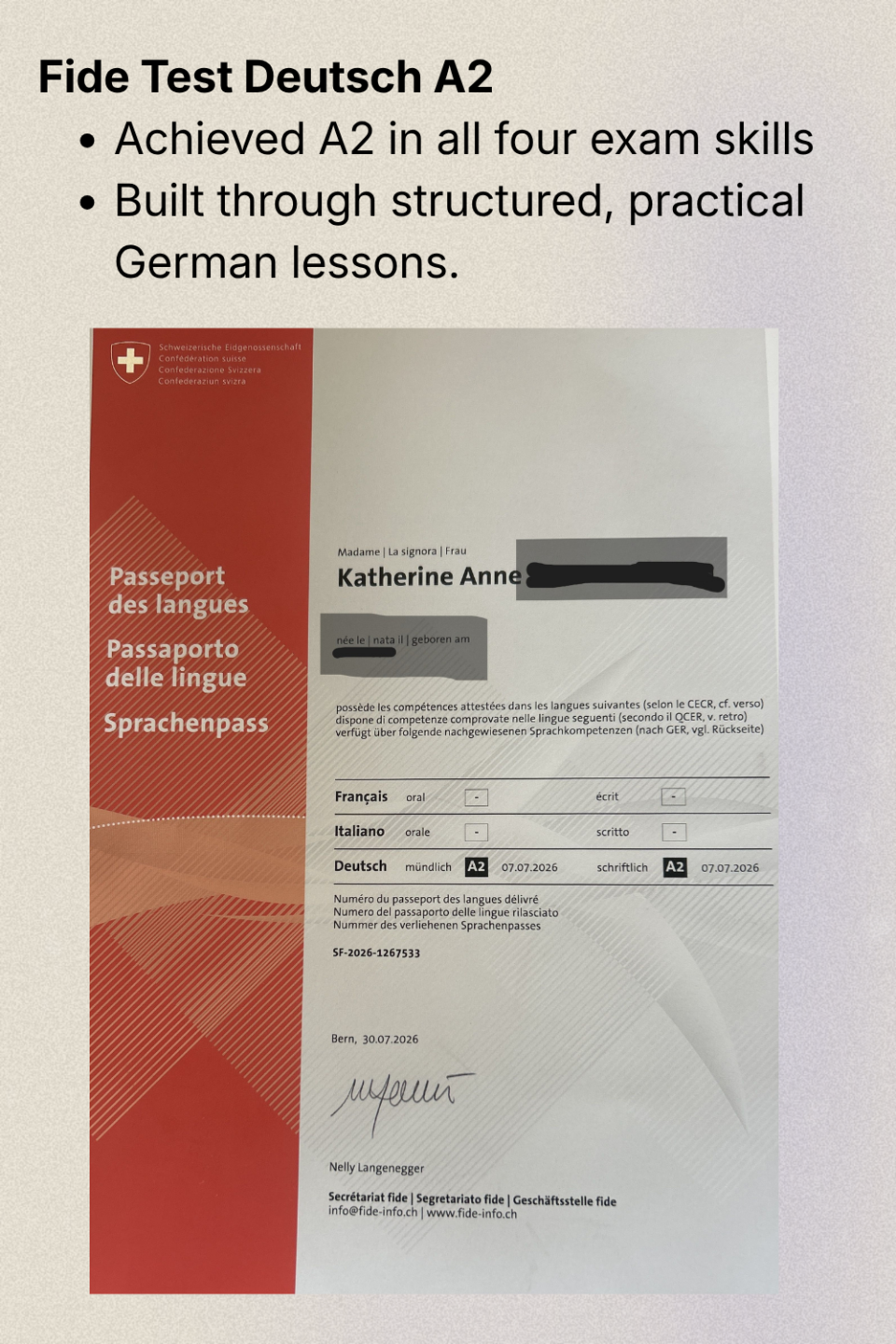
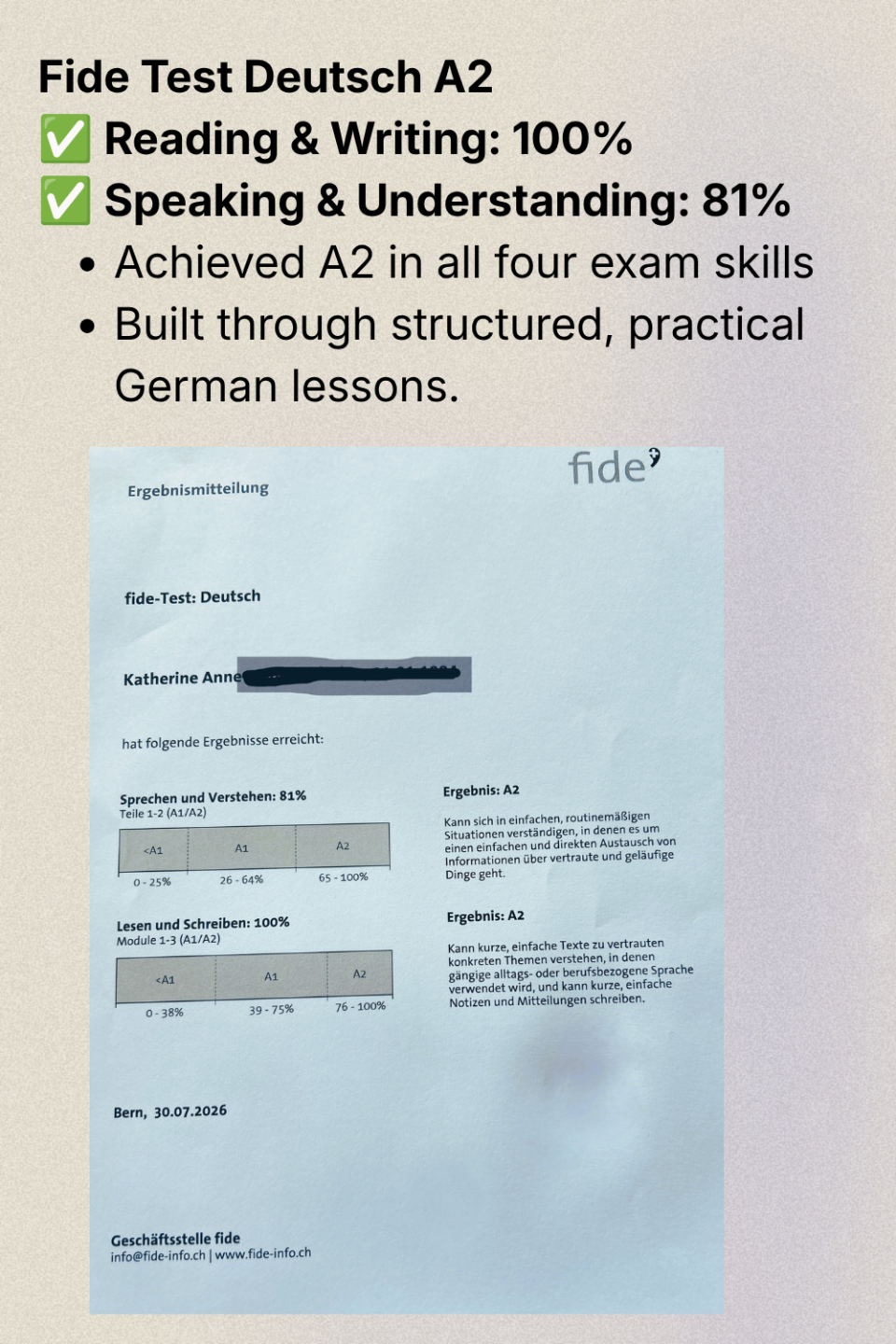
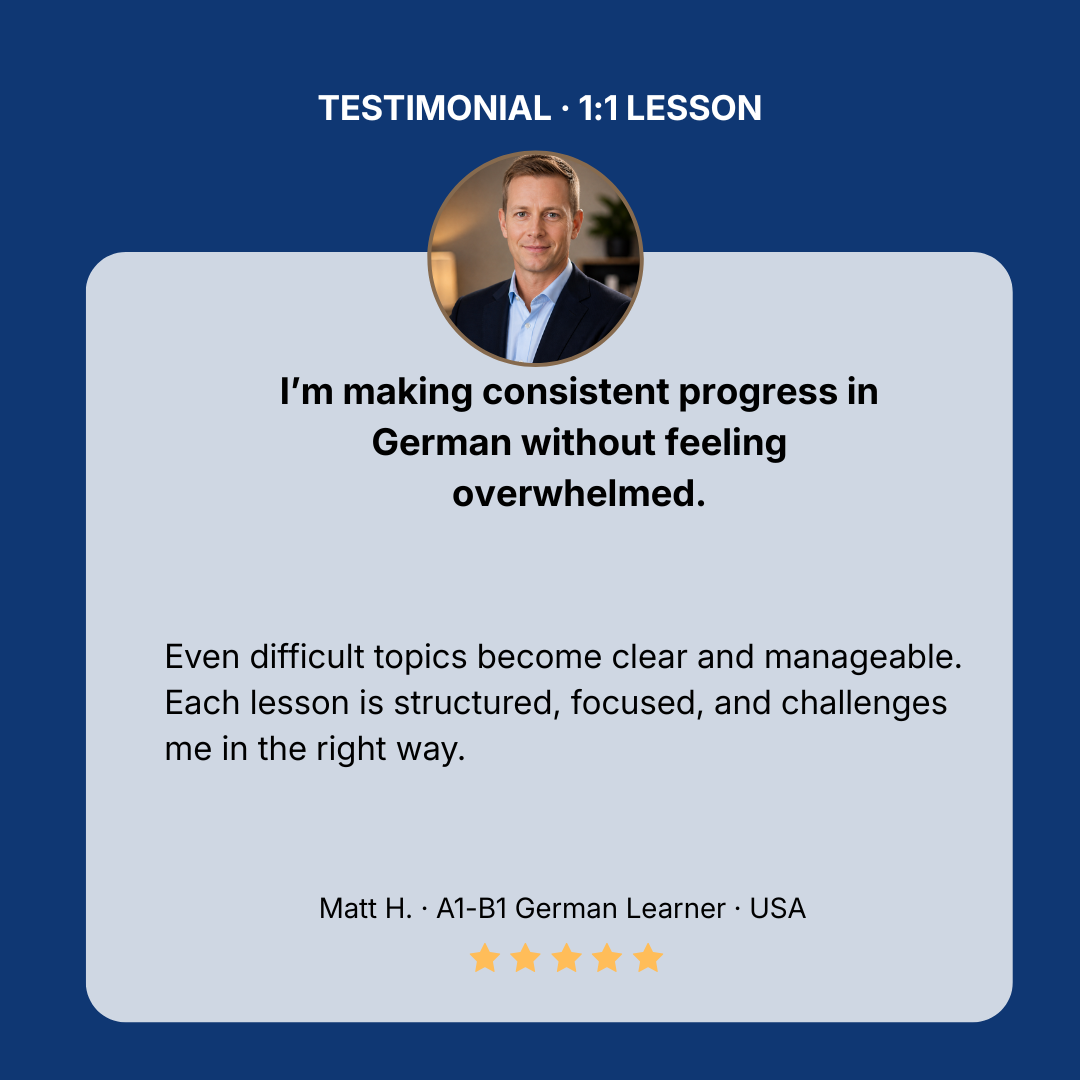
Here’s what learners have achieved with a clear and structured approach:
✨ Real progress from learners like you


Your next step depends on how much support and structure you want.
Some learners begin with the free 5-Day DER, DIE, DAS Roadmap and practise at their own pace.
Others are ready to go deeper with more structure and guided practice.
Whichever path you choose, the principle behind my teaching remains the same: clear guidance, focused practice and calm, consistent progress.
And that brings me to the method behind my teaching.
A Calm, Structured Way to Build Confident German
Over the past 11 years, I’ve helped ambitious A1–B1 learners and expats build their German through a calm, structured approach that focuses on what really matters.
I’ve also learned foreign languages myself and lived abroad, where people did not speak my native language. I know how challenging it can feel when you want to communicate confidently, but the language still makes you hesitate.
That is why my teaching approach is built around:
- ✔️ clear grammar
✔️ focused practice
✔️ calm, structured learning
✔️ practical application for everyday life and work
Because German should not feel unnecessarily complicated.
It should give you the confidence to communicate, participate and move forward in your life in Germany or Switzerland.
Strong German begins with a clear foundation — and for many A1–B1 learners, der, die and das are an excellent place to start.
One of the Best Places to Start: DER, DIE, DAS
Articles are connected to so much of the German grammar that follows — from vocabulary and plural forms to the German cases.
That is why I created:
Der Die Das in 7 Days
The Fast Track to Gender Confidence
A calm, structured course for busy A1–B1 learners who want to stop guessing and build a stronger German foundation step by step.
Course Value: CHF 97
Your Price: CHF 47 (Approximately EUR 50 / USD 57)
Designed for busy A1–B1 learners in Germany & Switzerland.
Not Ready for the Course Yet? Keep Learning With Me 💫
You don't need to figure everything out at once.
Small, consistent steps can keep you moving forward — even with a busy schedule.
Join My Free Weekly Newsletter
Each week, I'll send you short, practical German guidance to help you:
☑️ understand grammar more clearly
☑️ improve your German step by step
☑️ communicate more confidently in everyday life and at work
☑️ keep learning without unnecessary overwhelm
What You'll Receive
📩 Clear German explanations
📩 Practical strategies you can apply
📩 Calm guidance for consistent progress
Your data are treated confidently, and only used by Deutsch A Beatrice.
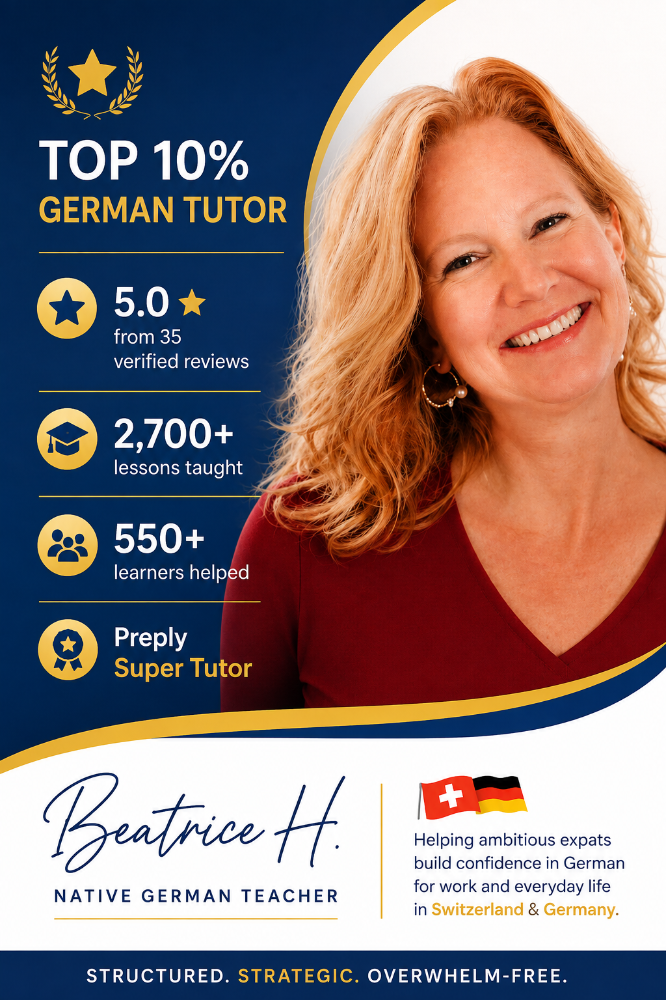
Hi, I'm Beatrice — an experienced German teacher for ambitious expats. 😊I help busy A1–B1 learners in Germany and Switzerland build confident German for work and everyday life — with clear grammar, practical strategies and a calm, structured approach.