Learn DER, DIE, DAS with Calm, Focused German Practice
Sep 17, 2026Does German Grammar Sometimes Make Your Mind Go Blank?
You sit down to study German.
You have your vocabulary list ready.
You know you should practise der, die and das.
But your mind is still somewhere else.
Work. Emails. Family. Appointments. Tomorrow's meeting.
And now you're supposed to concentrate on German grammar too.
For busy A1–B1 learners, the challenge isn't always a lack of motivation.
Sometimes, you simply need a way to transition from a busy day into focused learning.
That's where I like to combine German practice with a few moments of calm.
Not as a shortcut.
Not as a replacement for studying.
But as a simple way to pause, focus your attention and prepare for the German practice that follows.
In This Article, You'll Discover:
- ✔️ what I mean by combining calm learning with German practice
✔️ how I use meditation as a short preparation for focused study
✔️ what my own experience as a language learner taught me
✔️ how to create a simple pre-study routine
✔️ how to practise DER, DIE and DAS in just a few focused minutes
✔️ how calm learning fits into your bigger path towards confident German
German can be challenging. Your way of learning it doesn't have to feel chaotic. 🌿
When German Becomes One More Thing on Your To-Do List
Many of the learners I work with have busy lives.
They're balancing work, family, everyday responsibilities and life in—or preparation for—Germany or Switzerland.
Then German gets added to the list.
You may think:
I should study more.
I should remember this by now.
Why am I still hesitating over DER, DIE and DAS?
And before you've even opened your workbook, German has become another task competing for your attention.
That's why I believe a useful learning routine isn't only about what you study.
It's also about creating a clear moment in which you can actually give that learning your attention.
What Do I Mean by Learning German with Meditation?
I don't mean meditating instead of learning German.
And I certainly don't mean that closing your eyes for five minutes will magically teach you der, die and das. 😊
I use meditation as a short preparation for focused learning.
It can be as simple as:
putting your phone aside,
sitting comfortably,
taking a few slow breaths,
letting the day's distractions settle,
and then directing your attention towards one small learning goal.
After that, you study.
You learn the noun.
You learn the article.
You repeat it.
You write it.
You use it.
Calm first. Focus next. Practice afterwards.
That's the principle.
What 11+ Years of Teaching Have Shown Me
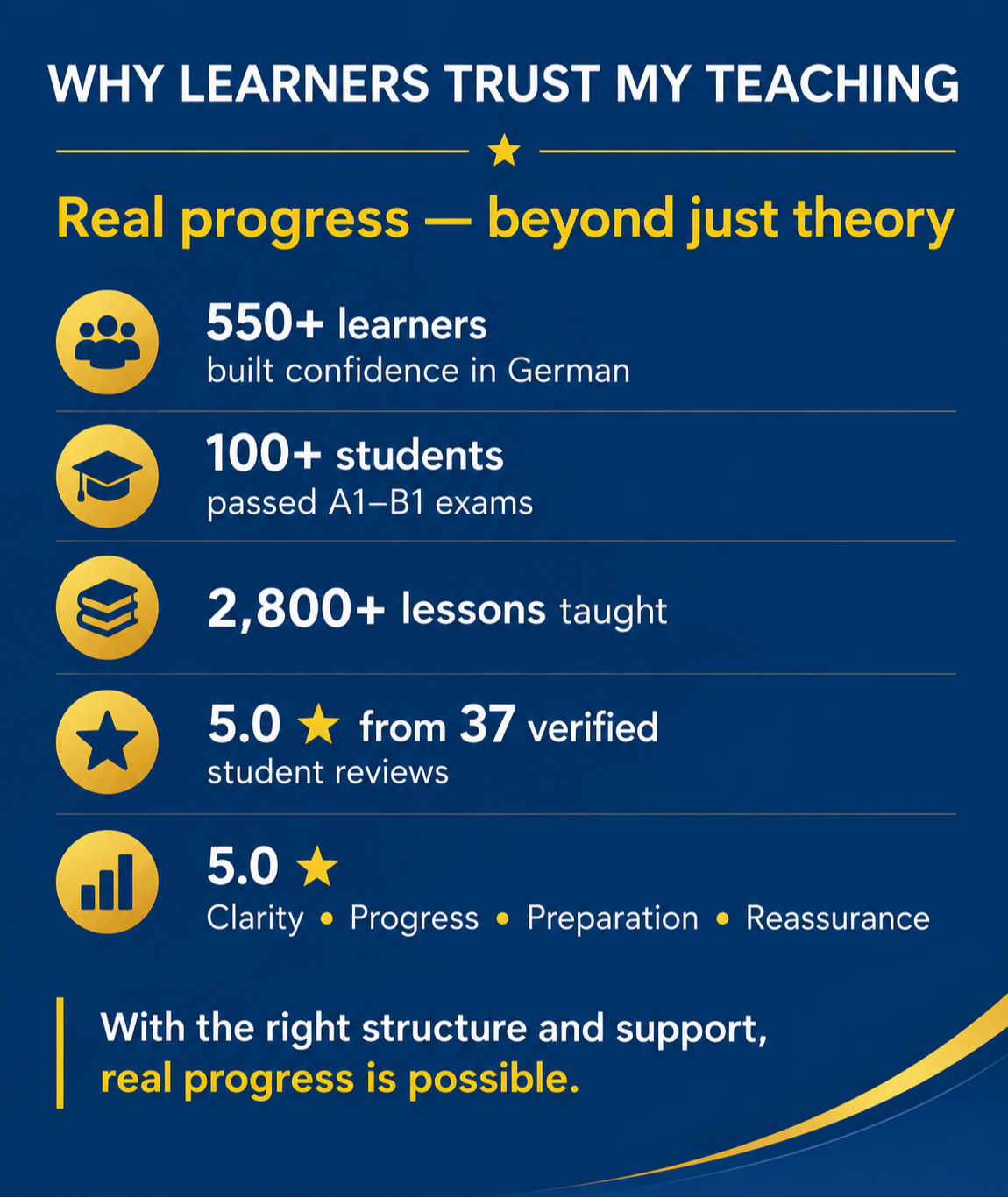
Over more than 11 years of teaching German learners from around the world, I've learned that giving students more and more information isn't always the answer.
A learner may already have three grammar books, several apps and pages of vocabulary.
What they often need is clarity about what to focus on next.
That's why my teaching is built around:
✔️ clear explanations
✔️ focused learning
✔️ manageable steps
✔️ practical application
✔️ calm, consistent progress
Meditation fits into that philosophy because it isn't another grammar rule to learn.
It's simply one way of creating a deliberate transition into your study time.
Then the learning begins.
I've Been a Language Learner Too
I know this from the learner's side as well.
I lived for seven years in the French-speaking part of Switzerland, where I learned French and needed it for everyday life and work.
That experience taught me that language learning has to fit into real life.
There will always be other responsibilities competing for your time and attention.
My goal wasn't to make every study session longer or more intense. I needed a way to keep learning, practising and using the language consistently.
That experience still influences the way I teach German today:
Focused, structured learning that you can realistically continue.
5 Practical Benefits of a Calm Learning Routine
1. It Creates a Clear Beginning
Instead of moving directly from work, emails or social media into grammar, create a deliberate transition:
Now I'm learning German.
2. It Helps You Put Distractions Aside
Put away your phone.
Close unnecessary tabs.
Give yourself a few quiet moments before beginning.
You're creating space for one task instead of ten.
3. It Encourages One Clear Goal
Instead of:
“Tonight I need to improve my German.”
choose:
“Tonight I'm practising five nouns with DIE.”
Much clearer.
4. It Makes the Session More Manageable
You don't have to conquer German tonight.
You only need to complete one focused practice session.
5. It Can Make Your Routine More Enjoyable
A routine you dislike can be difficult to maintain.
Creating a calmer study environment can turn German from another obligation into time you've deliberately set aside for your learning and your future.
Try This 5-Minute Calm DER, DIE, DAS Practice 🌿
Minute 1 — Arrive
Put your phone away.
Sit comfortably.
Take a slow, comfortable breath in through your nose.
Gently breathe out.
Take one more slow breath in.
And slowly breathe out.
Let your attention move away from what you were doing before.
Minute 2 — Choose One Focus
Choose DER, DIE or DAS.
Don't practise everything at once.
For example:
Today I'm practising DIE.
Minutes 3–4 — Listen, Repeat and Apply
Choose five nouns.
If you're using my colour method, visualise DIE in red:
🔴 die Arbeit = the work
🔴 die Wohnung = the apartment
🔴 die Besprechung = the meeting, the discussion
🔴 die Rechnung = the invoice
🔴 die Sprache = the language
Say each noun aloud.
Then make one or two simple sentences:
Die Besprechung beginnt um neun Uhr. = The meeting begins at nine o'clock.
Die Wohnung ist schön. = The apartment is nice.
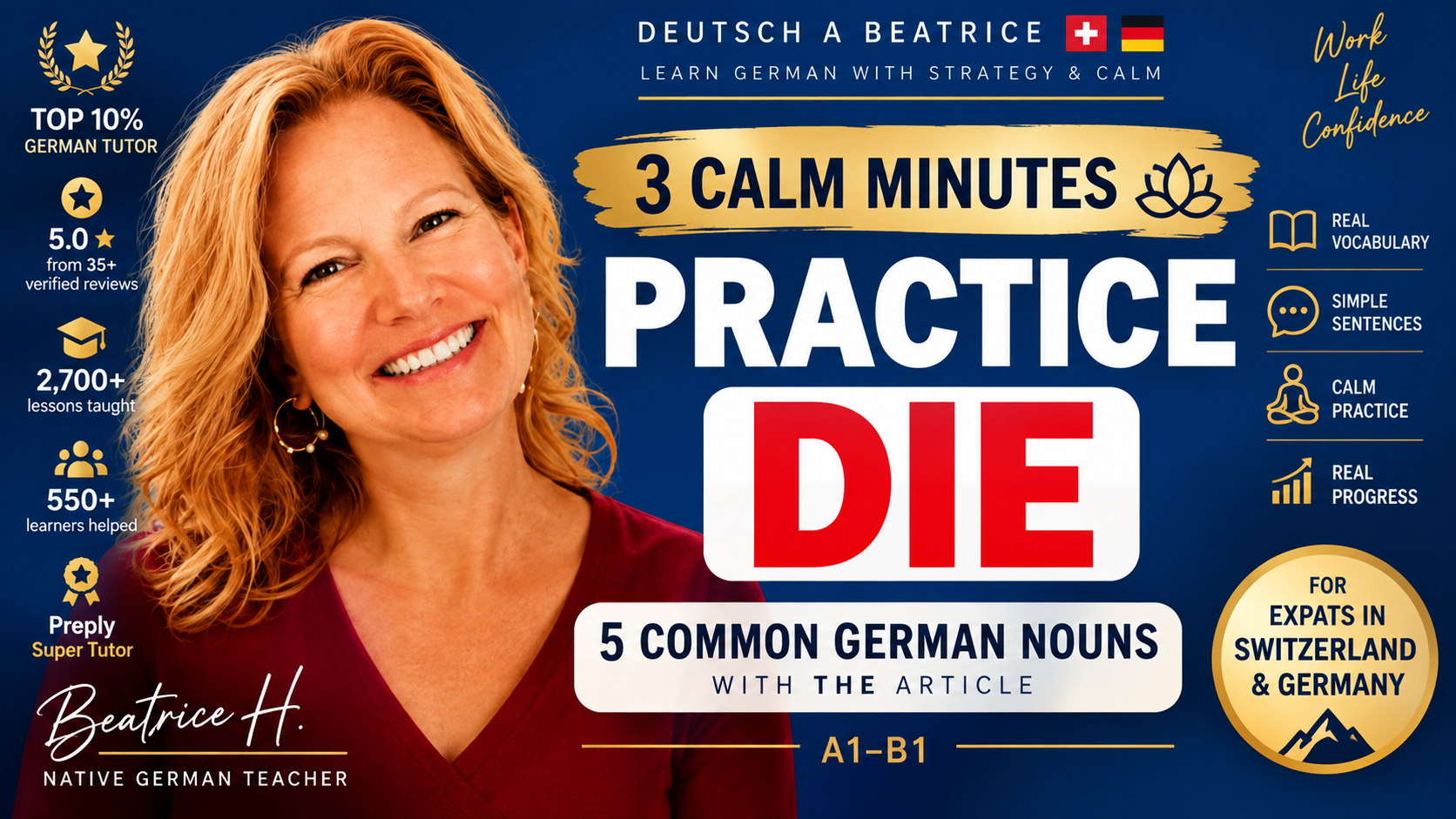
🎧 Calm German Practice: DIE ▶ Listen & Repeat
Take three minutes to slow down, listen and repeat five everyday German nouns with DIE.
Minute 5 — Recall
Now look away from your list.
Which words can you remember?
Can you remember the article too?
Which words still need another repetition tomorrow?
Then finish.
You've practised German.
No need to turn a five-minute exercise into another hour of study.
One focused step is enough for today. 🌿
Meditation Isn't a Shortcut to German Fluency
Meditation doesn't replace:
- grammar explanations,
- vocabulary learning,
- speaking,
- writing,
- listening,
- or repetition.
And it doesn't make German articles magically stick.
Think of it instead as one tool within a larger learning system.
The learning still happens through:
understanding → practising → applying → reviewing.
Meditation simply gives you a calm starting point from which to do that work.
Your German Confidence Path 🌿
Calm Learning Supports a Bigger Goal
DER, DIE and DAS are important, but they aren't the final destination.
They're one part of your German Confidence Path:
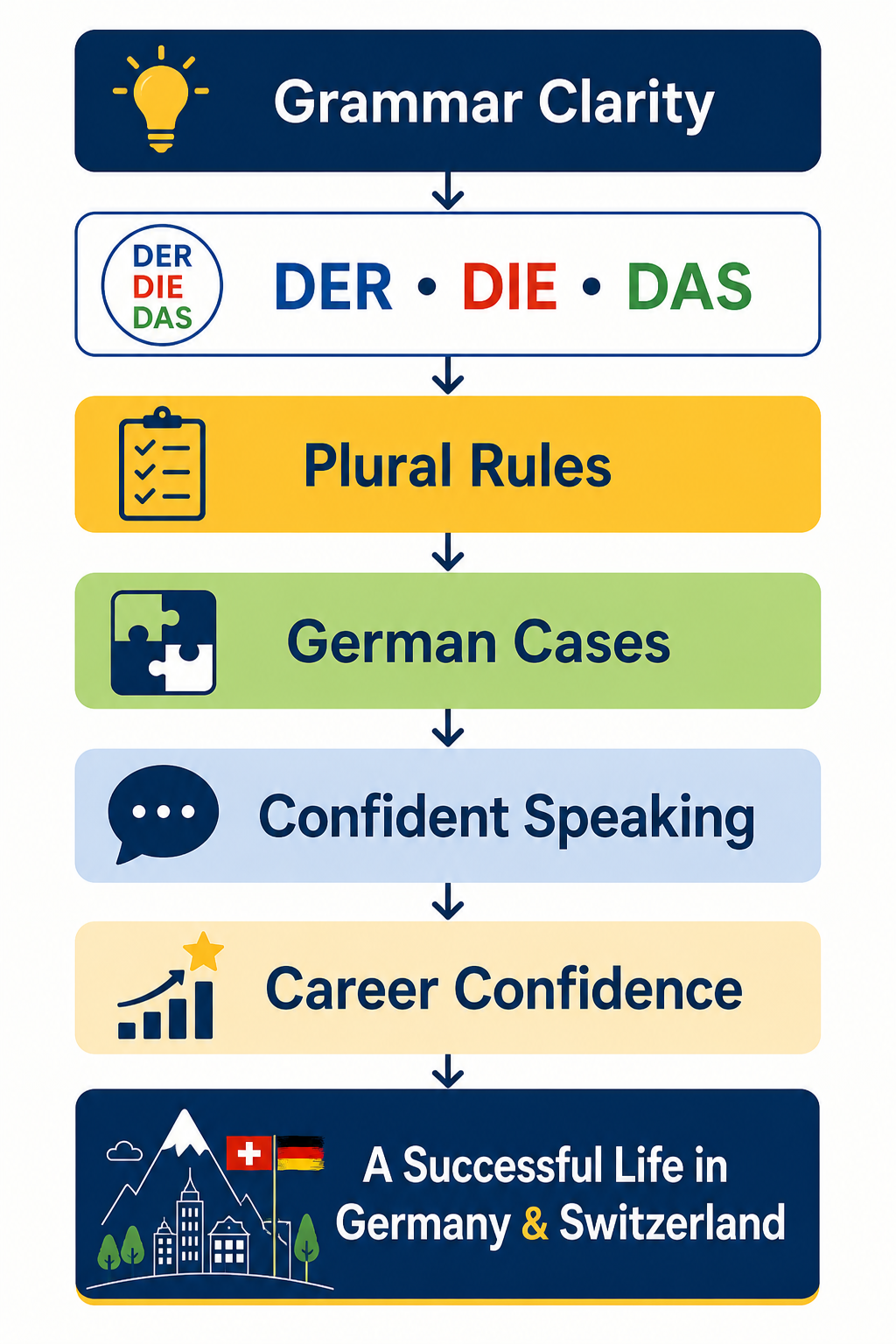
Calm learning supports the journey.
It doesn't replace the journey.
You still take each step—but you don't have to take every step at once.
Ready to Put Calm, Structured Learning into Practice?
If DER, DIE and DAS still make you hesitate, I've created a simple place to begin.
🎁 Get Your FREE 5-Day DER, DIE, DAS Roadmap
Use a few focused minutes each day to understand and practise the foundations step by step.
You can even begin each session with the short calm-learning routine you've just learned.
👉 Get the Free 5-Day DER, DIE, DAS Roadmap


Your next step depends on how much support and structure you want.
Some learners begin with the free 5-Day DER, DIE, DAS Roadmap and practise at their own pace.
Others are ready to go deeper with more structure and guided practice.
Whichever path you choose, the principle behind my teaching remains the same: clear guidance, focused practice and calm, consistent progress.
And that brings me to the method behind my teaching.
If you enjoyed the calm-learning approach in this article, you'll find it inside Der Die Das in 7 Days too.
Alongside the structured lessons and practical exercises, I've included guided meditation practice to help you approach your learning in a calm, focused way.
A Calm, Structured Way to Build Confident German
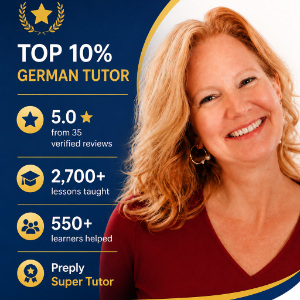
Over the past 11 years, I’ve helped ambitious A1–B1 learners and expats build their German through a calm, structured approach that focuses on what really matters.
I’ve also learned foreign languages myself and lived abroad, where people did not speak my native language. I know how challenging it can feel when you want to communicate confidently, but the language still makes you hesitate.
That is why my teaching approach is built around:
- ✔️ clear grammar
✔️ focused practice
✔️ calm, structured learning
✔️ practical application for everyday life and work
Because German should not feel unnecessarily complicated.
It should give you the confidence to communicate, participate and move forward in your life in Germany or Switzerland.
Strong German begins with a clear foundation — and for many A1–B1 learners, der, die and das are an excellent place to start.
One of the Best Places to Start: DER, DIE, DAS
Articles are connected to so much of the German grammar that follows — from vocabulary and plural forms to the German cases.
That is why I created:
Der Die Das in 7 Days
The Fast Track to Gender Confidence
A calm, structured course for busy A1–B1 learners who want to stop guessing and build a stronger German foundation step by step.
Course Value: CHF 97
Your Price: CHF 47 (Approximately EUR 50 / USD 57)
Designed for busy A1–B1 learners in Germany & Switzerland.
Not Ready for the Course Yet? Keep Learning With Me 💫
You don't need to figure everything out at once.
Small, consistent steps can keep you moving forward — even with a busy schedule.
Join My Free Weekly Newsletter
Each week, I'll send you short, practical German guidance to help you:
☑️ understand grammar more clearly
☑️ improve your German step by step
☑️ communicate more confidently in everyday life and at work
☑️ keep learning without unnecessary overwhelm
What You'll Receive
📩 Clear German explanations
📩 Practical strategies you can apply
📩 Calm guidance for consistent progress
Your data are treated confidently, and only used by Deutsch A Beatrice.
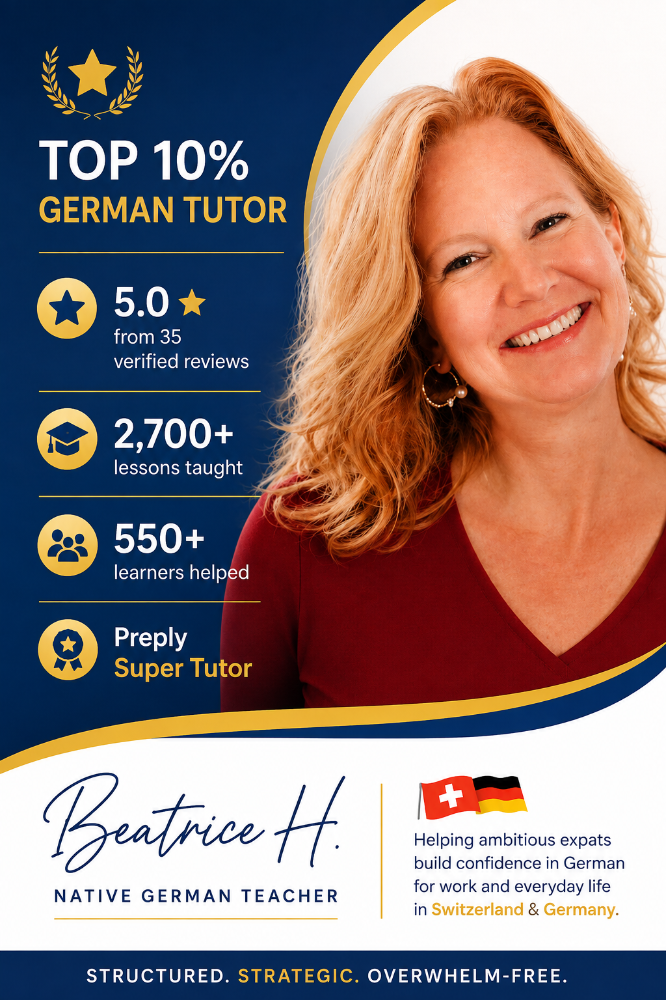
Hi, I'm Beatrice — an experienced German teacher for ambitious expats. 😊I help busy A1–B1 learners in Germany and Switzerland build confident German for work and everyday life — with clear grammar, practical strategies and a calm, structured approach.